Monday, December 9, 2013
Who is 'Dr. Seuss' - Lindsay Crook
Theodor Seuss Geisel was born on March 2nd, 1904 in the town of Springfield, Massachusetts. Throughout his life, Theodor Seuss Geisel wrote over 60 children's books , with the likes of Green Eggs and Ham , The Cat in The Hat and the recently popular movie, The Lorax, just to name a few. These books were and still are a huge part of children's learning in the early years of school. He began writing cartoons at a very young age and his drawing was outstanding. As he graduated from Dartmouth College, he attend Lincoln College for a brief time, before returning to Springfield. After years of drawing and writing, he finally had one of his cartoons posted in The Saturday Evening Post. From this cartoon, he earned $25, which he then used to make a move to New York to pursue his love of cartoon drawing and writing. After bouncing around at various jobs over the next decade, Geisel found himself writing cartoons during World War II for the Popular Front Newspaper. As he was not an advocate for war and was too old to be enlisted, he still wanted to find a way to help out any way he could. This then led him to talking a job in the Army making educational movies for the war effort. These cartoon style movies were designed for training purposes for U.S. soldiers, which many disagreed to. Many of his books that he wrote after the war contained hidden messages on his personal views on everything from war to the government but at the end of the day, Geisel simply wrote books for children to help them learn how to read and understand writing. Sadly in 1991, Geisel passed away from throat cancer, but still to this day, his books have a large and profound impact on children and hopefully this will continue.

The True Meaning Behind "The Grinch Who Stole Christmas" - Lindsay Crook
The Grinch Who Stole Christmas is a very feel good movie, but many people fail to look beyond its simple messages. There are plenty of messages within this movie that many people skip over. On a very basic level, The Grinch Who Stole Christmas is a story of redemption and valuing those closest to you. In saying that, if you have seen the Grinch, you would know that at the end, the Grinch is accepted to spend Christmas with the Who's. This portrays a strong message, that Christmas isn't about gifts, but it is about the people. It is about accepting those that are different and by doing this, we can all make the world a better place. The world could all take a lesson from this movie in realising that you can have all the items and gifts in the world, but at the end of the day, nothing really matters besides your family and friends being together.
A Symbolic View of How the Grinch Stole Christmas by Austin Cox
I think we all know the story of the Grinch quite well, and for those who don't, here it is in a nutshell. The Grinch in the beginning is an evil man who lives on a mountain outside of Whoville. His master plan is to steal all of the Christmas gifts from under the trees of each household in Whoville the night before Christmas, so the Whos down in Whoville wake up to a presentless Christmas. The Grinch does this successfully with his pet dog then realizes it was wrong. Thus, he returns all of the gifts to their rightful owners and has a feast with the Whos.

Now, if we compare this to the modern
political sphere, I think we can draw some surprising comparisons. The Grinch
can be viewed as the Federal Reserve, and the Whos down in Whoville represent
the American people in America. The gifts under the Christmas trees represent
the fruits of the labor of the American people. Lastly, the acquaintance to the
Grinch (the dog) is somewhat like the federal government. The Grinch is taking
away from the citizens of Whoville similar to how the Federal Reserve steals
from the American people through inflation meaning they devalue the earnings,
savings, and investments of the American people. The federal government abets
the Federal Reserve through not abolishing its very existence. Once the Federal
Reserve is abolished, the fruits of the labor of the American people may be
rightfully returned to them because there will no longer be a central banking
system that artificially alters interest rates and prints money out of thin
air. The American people will then flourish once the fruits of their labor are
returned to them just like the presents of the Whos in Whoville.

-Austin Cox
Friday, December 6, 2013
My favorite thing about How the Grinch Stole Christmas:Eddy Cordek
My favorite thing about How the Grinch Stole Christmas isn't really from the story or anything but a scene from the movie. In this scene we get to see how The Grinch (Jim Carrey) lives. Its quite a sad living condition due to his lack of hygiene and loneliness. The scene is easily the funniest in the movie because of the hilarity of his voicemail and how he lives. I still laugh to the point where I am crying while watching this scene. I remember having my Mom rewind this scene hundreds of times when I was a kid and I would still laugh like the first time I've ever seen the film. The scene can be viewed below. WARNING: Excessive laughing may ensure. Exercise caution when viewing...
The Grinch Movie Review (Starring Jim Carrey)
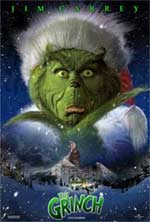
Ron Howard's live-action version of Dr Seuss is an enchanting fairy-tale immersed in boundless good cheer. Inside a snowflake, high atop Mount Crumpit, lives a mean-spirited recluse called The Grinch (Jim Carrey) with his pet hound Max. Wallowing in self-loathing and burdened with a heart two sizes too small, The Grinch shudders at the thought of the impending holiday season. So he resolves to make all of the Whos just as miserable as himself by stealing their presents, food and decorations. Disguising himself as Santa Claus and strapping a pair of fake antlers on to long-suffering Max, the Grinch makes his way into Whoville to deliver a very special Christmas grinching. During his sneaky mission, The Grinch meets an innocent little girl named Cindy Lou Who (Taylor Momsen) who hopes to reignite the community spirit in her family, neighbours and friends. The little girl's kindness and pure heart have a profound effect on the reclusive Grinch, and he unearths a long forgotten part of his soul. Together these kindred spirits find friendship and hope, and rediscover the true meaning of Christmas. The Grinch is an immersive story full of heart-warming old-fashioned family values, breathtaking make-up and sets and lively direction, wrapped up in the magic of Carrey's manic central turn.Overall I would giv the film a 4 out of 5 and The Grinch is the perfect yuletide treat for the whole family, underpinned by a timely message about the commercialism of the festive season. An external movie review from another source known as "Rotten Tomatoes" can be found here

Dr. Seuss Quotes with Advice on Social Media
I found an article that actually interprets quotes from Dr. Seuss to Social Media. It's very interesting because Dr. Seuss and his stories like "How the Grinch Stole Christmas" has a lot of learning aspects for a younger audience. The author of the article, Heidi Cohen, takes certain quotes to help your Social Media first steps. For example the quote from Dr. Seuss "Only you can control your future", the author goes on to state "All you need is the willingness to take your first step and be transparent. You need to care for others and be willing to be open and engage with them." She is converging the quotes and helping people to be more comfortable with Social Media. This really show the stories and inspiration of Dr. Seuss can be applied to any form of media and inspire those working to strive in the industry. The full article can be found here


New Blog Topic: "How the Grinch Stole Christmas"
Our next and last blog topic will be one that is seasonal. We will be discussing the story of "How the Grinch Stole Christmas". The rest of the blog will include our own topics we have chosen and our favorite things about the story, movie, or anything we learned about the story and the universe in the story itself. The Grinch is a fictional character created by Dr. Seuss. He first appeared as the antihero of the 1957 children's book, How the Grinch Stole Christmas! The devious, anti-holiday spirit of the character has led to the term Grinch coming to refer to a person opposed to Christmas time celebrations or to someone with a coarse, greedy attitude. In fact, a document in the live-action film (the Book of Who) stated that "The term Grinchy shall apply when Christmas spirit is in short supply". The Grinch has since become an icon of the winter holidays, despite the character's hatred of the season, and has appeared on various forms of memorabilia such as Christmas ornaments, dolls, Halloween costumes, and various items. In 2002, TV Guide ranked The Grinch number 5 on its "50 Greatest Cartoon Characters of All Time" list. 

Subscribe to:
Posts (Atom)